
Designing Your Item Economy: 47 Items That Players Want to Own

deps
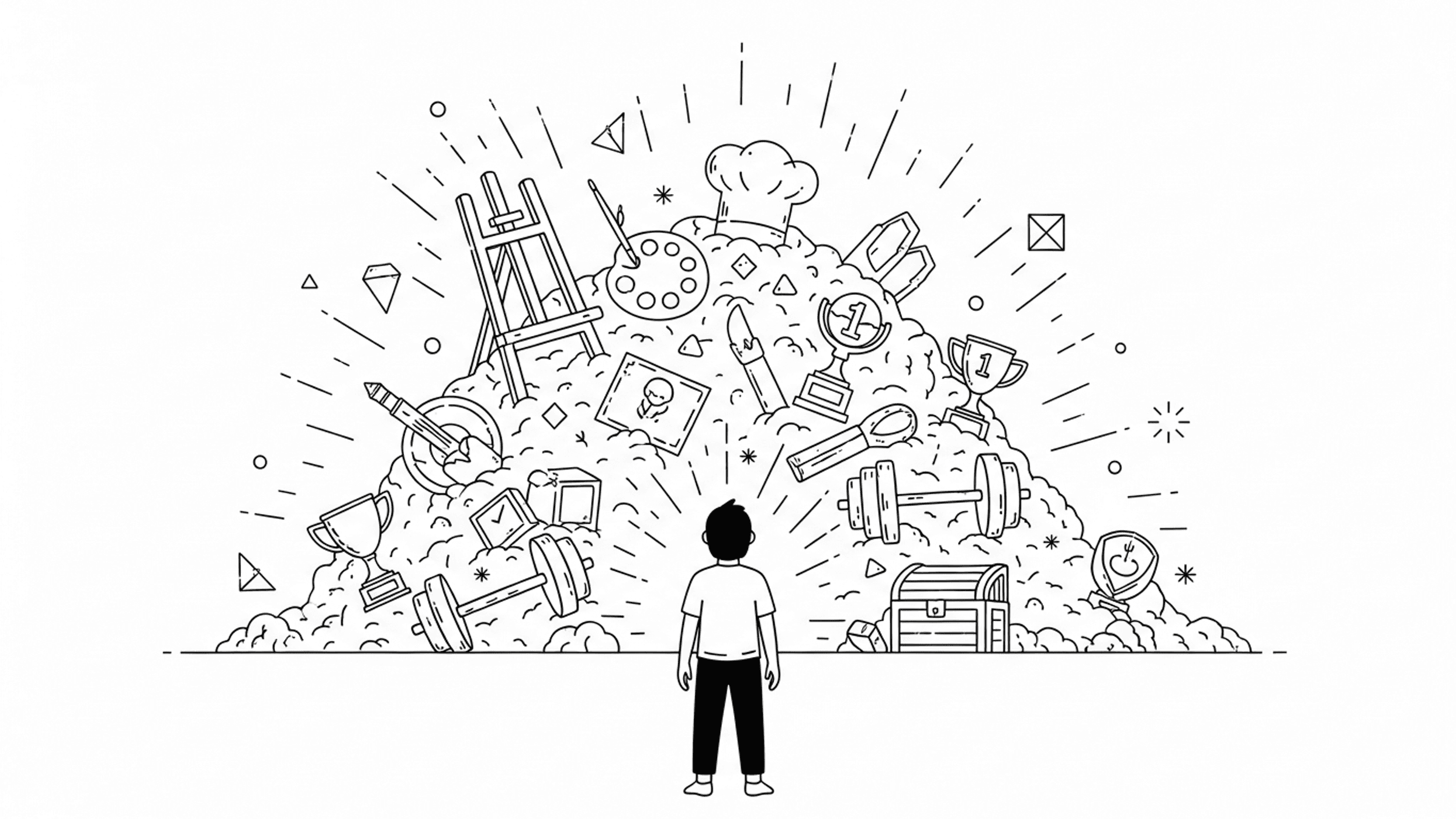
Here is a question that kept me up at night: Why do players dedicate hours to acquiring cosmetic skins that offer no practical advantage?
The answer reveals fundamental principles of item economy design.
It is not solely about power, nor even rarity. It is about identity. Players desire items that communicate their individual characteristics – their skill, dedication, and taste. Understanding this shifts the design focus from mere items to compelling narratives.
This is Part 2 of the "Building an NFT Marketplace for Your Game" series. Today, we are delving into the psychological and mathematical underpinnings of Puzzle Pocket's 47-item economy, exploring why some items have become NFTs while others have not.
The Foundation: Justification for Item Categories
Initially, when designing Puzzle Pocket's inventory, I committed a common error. I compiled a list of every item I considered potentially appealing:
- Score multipliers
- Extra lives
- Special power-ups
- Character skins
- Board themes
- Achievement badges
- ...and 40 more ideas
While the list appeared comprehensive, it proved entirely impractical.
The core issue? Players struggle to mentally process 47 disparate items. Their minds require categories – designated groupings for efficient sorting. Without this structure, your inventory devolves into an overwhelming jumble.
The Four Pillars
After multiple iterations, I established four distinct categories, each addressing a specific psychological need:
| Category | Purpose | Player Need |
|---|---|---|
| Consumables | Immediate help | "I need to win this round" |
| Boosters | Enhanced performance | "I want bigger scores" |
| Skins | Visual expression | "I want to look unique" |
| Collectibles | Status symbols | "I want to show my dedication" |
Observe how these categories align with diverse player motivations. Some players are driven by competition (boosters), others by self-expression (skins), and still others by completionism (collectibles). A robust economy caters to all these preferences.
Design Principle: Each item category should address a distinct question that players ask themselves during gameplay.
The Complete Item Breakdown
Here is a detailed breakdown of how Puzzle Pocket's 47 items are distributed across these categories. This is not merely theoretical; this structure is currently implemented in the live game.
Consumables (12 items)
Consumables form the workhorses of your economy. They are used, depleted, and require replenishment. This creates a natural gold sink, maintaining the economic balance.
| Item | Rarity | Effect | Gold Cost |
|---|---|---|---|
| Extra Life | Common | +1 continue | 50 |
| Hint Token | Common | Reveals optimal move | 75 |
| Time Freeze (5s) | Common | Pause timer briefly | 100 |
| Time Freeze (15s) | Uncommon | Pause timer longer | 250 |
| Undo Move | Common | Reverse last action | 60 |
| Board Shuffle | Uncommon | Randomize current board | 200 |
| Color Bomb | Rare | Clears one color (Match-3) | 400 |
| Line Blast | Rare | Clears entire row | 400 |
| Shield | Uncommon | Block one negative effect | 175 |
| Lucky Charm | Rare | +15% rare drop chance (1 game) | 500 |
| Double Coins | Uncommon | 2x coins (1 game) | 300 |
| Mystery Box | Epic | Random item drop | 750 |
Rationale for this distribution:
Note that fundamental needs (lives, hints) are classified as Common. They are inexpensive and abundant, as scarcity in these areas leads to frustration rather than stimulating challenge. Conversely, powerful effects (Color Bomb, Lucky Charm) are Rare – offering excitement upon acquisition and significant impact upon use.
The Mystery Box is intentionally Epic. It stands apart as the only consumable designed to generate anticipation rather than address immediate needs. Opening a Mystery Box should feel like a notable event.
Boosters (10 items)
Boosters enhance performance without being indispensable. While skilled players can reach the top of leaderboards without them, boosters elevate the overall enjoyment of the climb.
| Item | Rarity | Effect | Duration |
|---|---|---|---|
| Score +10% | Common | Slight score boost | 1 game |
| Score +25% | Uncommon | Notable score boost | 1 game |
| Score +50% | Rare | Major score boost | 1 game |
| Combo Extender | Common | +1s combo window | 1 game |
| Combo Extender+ | Uncommon | +2s combo window | 1 game |
| Starting Power-Up | Uncommon | Begin with random power | Brick Breaker |
| Cascade Bonus | Rare | +10% per cascade level | Match-3 |
| Ghost Preview | Uncommon | See piece placement | Tetris |
| Hold Slot | Rare | Save piece for later | Tetris |
| Perfect Game Token | Epic | 2x score if no mistakes | 1 game |
The critical design tension:
Boosters must provide a tangible advantage without feeling mandatory. If players believe "I cannot compete without boosters," a pay-to-win dynamic emerges. Conversely, if players perceive "boosters are pointless," development efforts are wasted.
The solution lies in amplifying existing skill, not replacing it.
A Score +50% boost is inconsequential if a player only scores 1,000 points. However, a skilled player achieving 50,000 points receives an additional 25,000, thereby rewarding mastery.
Skins (15 items)
This category presents the most intriguing aspect. Skins have no impact on gameplay, yet players are intensely invested in them.
| Item | Rarity | Description | Game(s) |
|---|---|---|---|
| Classic Paddle | Common | Default look | Brick Breaker |
| Neon Paddle | Common | Glowing blue | Brick Breaker |
| Wooden Paddle | Uncommon | Natural oak texture | Brick Breaker |
| Golden Paddle | Rare | Metallic gold finish | Brick Breaker |
| Crystal Paddle | Epic | Transparent with sparkles | Brick Breaker |
| Obsidian Paddle | Legendary | Dark glass with purple glow | Brick Breaker |
| Candy Gems | Common | Sweet pastel colors | Match-3 |
| Jewel Gems | Uncommon | Cut gemstone style | Match-3 |
| Element Gems | Rare | Fire, water, earth, air | Match-3 |
| Cosmic Gems | Epic | Stars and galaxies | Match-3 |
| Classic Blocks | Common | Standard Tetris colors | Tetris |
| Pixel Blocks | Uncommon | Retro 8-bit style | Tetris |
| Hologram Blocks | Rare | Translucent holo effect | Tetris |
| Liquid Metal Blocks | Epic | Mercury-like reflection | Tetris |
| Void Blocks | Legendary | Black with star particles | Tetris |
The underlying psychology driving the desire for cosmetics:
Skins function as identity signals. By using the Obsidian Paddle, players communicate: "I am a dedicated player. I have earned a rare item. This is my representation in this game."
This is also the reason Legendary skins hold significance for NFT marketplaces. They transcend mere rarity; they are status symbols that players genuinely desire to own.
Collectibles (10 items)
Collectibles serve purely as indicators of achievement and status, validating a player's journey.
| Item | Rarity | How to Obtain |
|---|---|---|
| First Victory Badge | Common | Win any game |
| Brick Master Badge | Uncommon | Complete all Brick Breaker levels |
| Match Maestro Badge | Uncommon | 10-chain cascade in Match-3 |
| Tetris Legend Badge | Uncommon | Clear 4 lines simultaneously |
| Century Club Trophy | Rare | Play 100 total games |
| Perfect Game Trophy | Rare | Complete any game with no mistakes |
| Speed Demon Trophy | Epic | Beat par time on 5 levels |
| Completionist Crown | Epic | Own all Common and Uncommon items |
| Grand Master Crown | Legendary | Own all items except Legendary |
| Founder's Medal | Legendary | Play during launch week |
The crucial insight regarding collectibles:
Most collectibles are unattainable through purchase, requiring specific achievements. This design choice is deliberate. A badge's value derives from its representation of accomplishment. If the "Perfect Game Trophy" could be purchased, its significance would be nullified.
The Founder's Medal presents a particularly interesting case. Its availability is time-limited, creating artificial scarcity. Players who joined early possess an item that later players can never acquire... unless they purchase it from a current owner.
This is where NFTs excel.
The Math Behind Rarity: The Importance of Percentages
Let's discuss the numerical aspect. Puzzle Pocket employs this rarity distribution:
- Common: 60%
- Uncommon: 25%
- Rare: 10%
- Epic: 4%
- Legendary: 1%
These values are not arbitrary. They are meticulously calibrated to elicit specific psychological responses.
The "Just One More Game" Formula
When a player completes a game, they have a chance to receive a random item drop. Here's the resulting statistical distribution:
After 10 games:
- Approximately 6 Common drops (expected)
- Approximately 2-3 Uncommon drops
- Approximately 1 Rare drop (potentially)
- Epic/Legendary? Extremely unlikely
After 100 games:
- Most Common items collected
- Half of Uncommon items collected
- A few Rare items collected
- Approximately 4 Epic items (statistically)
- Approximately 1 Legendary item (potentially)
After 500 games:
- All Common and Uncommon items likely owned
- Most Rare items collected
- Several Epic items
- Still pursuing the final Legendary item
This creates a satisfying progression curve. Initial sessions feel rewarding (frequent Common drops). The mid-game maintains engagement (pursuit of Rares). The late-game provides long-term objectives (the Legendary chase).
The Legendary Paradox
Here's a counterintuitive observation: a 1% drop rate for Legendary items benefits players.
If Legendary items dropped 10% of the time, they would lose their mystique due to widespread availability. The "I finally got it!" moment would cease to exist.
However, at a 1% drop rate, players develop stories around their acquisition. "I played for three months and finally got the Void Blocks skin!" Such a player is unlikely to ever sell that item, as it has become integral to their gaming narrative.
Unless... they could sell it for real monetary value. This is where NFTs revolutionize the equation.
Rarity Rule: The rarer the item, the more its value derives from scarcity. The more common the item, the more its value must derive from its inherent utility.
The Million-Dollar Question: Which Items Should Be NFTs?
Not all items should be mintable. This may be the most critical lesson in this series.
Here is my framework for decision-making:
NFT-Worthy Items
Skins (especially Rare and above)
- Visual permanence – they are not consumed
- Identity value – players desire to "own" their appearance
- Trade potential – someone else may appreciate your style
Collectibles (all rarities)
- Status symbols – proof of achievements
- Limited supply – some are time-gated
- Emotional value – represent player journeys
Special Event Items
- Launch exclusives
- Collaboration items
- Seasonal limited editions
NOT NFT-Worthy Items
Consumables
- Designed for consumption and replenishment
- Lack long-term ownership appeal
- Would lead to illogical hoarding ("I refuse to use my NFT potion")
Basic Boosters
- Utility-focused, not identity-focused
- Players intend to use them, not display them
- Frequent use makes NFT integration cumbersome
Gameplay-Essential Items
- Raises pay-to-win concerns
- Locks content behind wallet requirements
- Negatively impacts the free-to-play experience
The Puzzle Pocket Decision
Here is the actual minting decision I implemented:
| Mintable | Not Mintable |
|---|---|
| All Skins (15 items) | Consumables (12 items) |
| All Collectibles (10 items) | Basic Boosters (8 items) |
| Epic/Legendary Boosters (2 items) | — |
| Total: 27 NFT items | Total: 20 non-NFT items |
Why include the two Epic/Legendary boosters? At that level of rarity, even utility items transform into collectibles. Owning a Legendary Perfect Game Token becomes a display of status, regardless of whether it's ever used.
Balancing Reward vs. Value
The central tension involves making items sufficiently accessible to avoid player frustration, yet sufficiently rare to maintain NFT value.
A dual-currency system offers a solution.
Puzzle Pocket's Implementation
Gold (earned through gameplay)
- Winning games = gold
- Achievements = gold bonuses
- Daily login = small gold gift
Premium Currency (real money, optional)
- Accelerates collection
- Never required for any content
- Cannot directly purchase Legendary items
NFT Minting (separate from both)
- Requires prior ownership of the item
- Small minting fee (covers blockchain gas costs)
- Item remains usable after minting
This creates three valid pathways to acquiring the same item:
- Grind: Play until the item drops.
- Purchase: Buy with gold (if available in the shop).
- Trade: Buy the NFT from another player.
Each option respects the player's investment. Grinders feel their time is valued. Buyers feel their monetary contribution is worthwhile. Traders recognize the marketplace's inherent value.
The Psychology of "Feeling Rewarding"
I'll conclude with a subtle yet critical point.
When a player earns a Rare item, what elicits the feeling of reward?
It's not solely the item itself. It's the contrast against the backdrop of Common items.
A Rare item feels valuable because the player has previously experienced Common items. They understand the baseline experience, which elevates the perceived value of "rare."
This underscores the importance of your Common items. They are not mere filler. They establish the foundation against which all other items are evaluated.
Design your Common items with care:
- Ensure they are genuinely useful (not obviously inferior).
- Invest in decent visual design (avoid placeholder art).
- Allow them to serve as the reliable bedrock of gameplay.
When Common items feel satisfying, Rare items feel exceptional. When Rare items feel exceptional, Legendary items become unforgettable.
And unforgettable items? Those transform into NFTs worth owning.
What Comes Next
In Article 3, we'll delve into the technical aspects by building the Supabase Edge Functions that enable secure server-side minting:
- Setting up the ForTem.gg API integration
- Securing your minting endpoint
- Validating item ownership prior to minting
- Handling errors and edge cases gracefully
The item economy we've designed today? Next time, we'll provide the infrastructure to transform it into tangible blockchain assets.
Try It Yourself
Before the next article:
- Play Puzzle Pocket at puzzle-pocket.vercel.app
- Pay attention to how items feel when you earn them.
- Notice which items you actually want to keep, use, or trade.
The most effective way to grasp game economy design is to experience it firsthand as a player.
See you in Article 3.
This is Part 2 of the "Building an NFT Marketplace for Your Game" series. Next up: Supabase Edge Functions for secure, server-side NFT minting.